Overwatch Game Modes
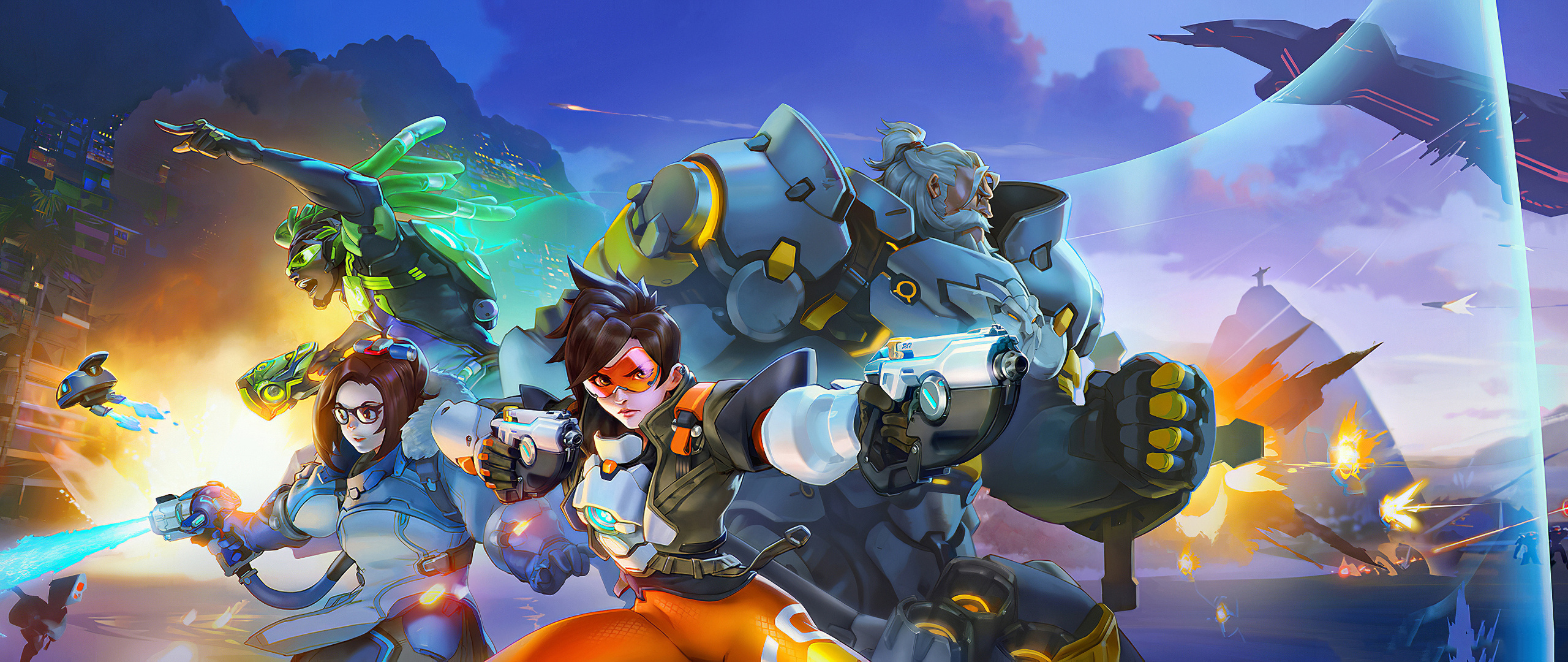
A complete breakdown of every game mode in Overwatch. Learn the objectives, mechanics, strategies, and which maps belong to each mode — from competitive staples to arcade favorites.
Competitive Game Modes
These are the modes featured in Overwatch Competitive Play. Mastering these is essential for ranked progression.

Escort
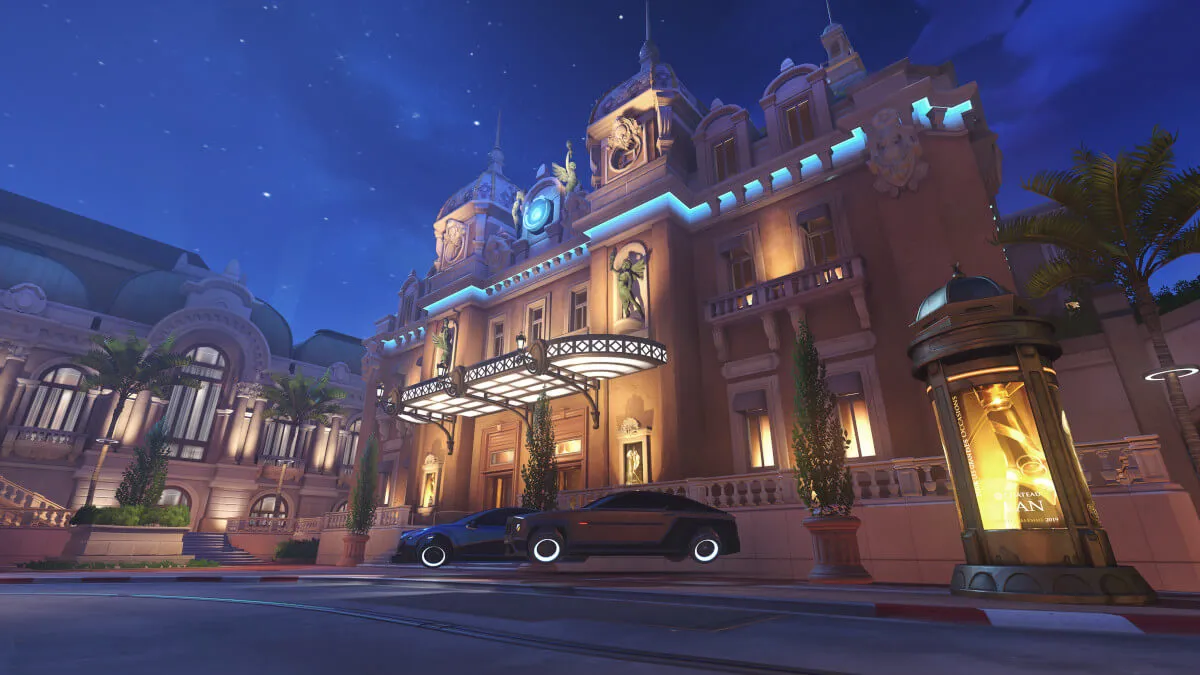
9 mapsEscort is one of Overwatch's original and most iconic game modes. The attacking team must escort a payload — a vehicle or cart — along a predetermined track through checkpoints to the final delivery point. The payload moves automatically when attacking players are nearby and stops if no attacker is close. The defending team must halt the payload's progress before time expires. If attackers reach a checkpoint, their timer is refreshed.
How to Win
Attackers win by successfully pushing the payload to the final delivery zone before time runs out. Defenders win by preventing this until the clock hits zero.
Ideal For
Players who enjoy structured team fights with clear objectives and distinct attack/defense roles.
Key Mechanics
- Payload moves faster with more attackers nearby (up to 3)
- Payload stops completely when defenders contest or outnumber attackers on it
- Checkpoints refresh the attack timer and act as new spawn points for attackers
- Overtime triggers when an attacker is on the payload as time expires
- Attackers respawn and push from the last reached checkpoint
- Defenders push the payload backwards if they stand on it without opposition
Pro Tips
- Never leave the payload uncontested — even one person on it applies pressure
- Use high-mobility heroes like Lucio, Tracer, or Sombra to quickly return to the payload
- Holding a checkpoint gives your team time to regroup and set up better positions
- Defenders should contest the payload to waste attacker time, but avoid overextending
- Ultimate economy is critical — save big ultimates for checkpoint pushes

Hybrid
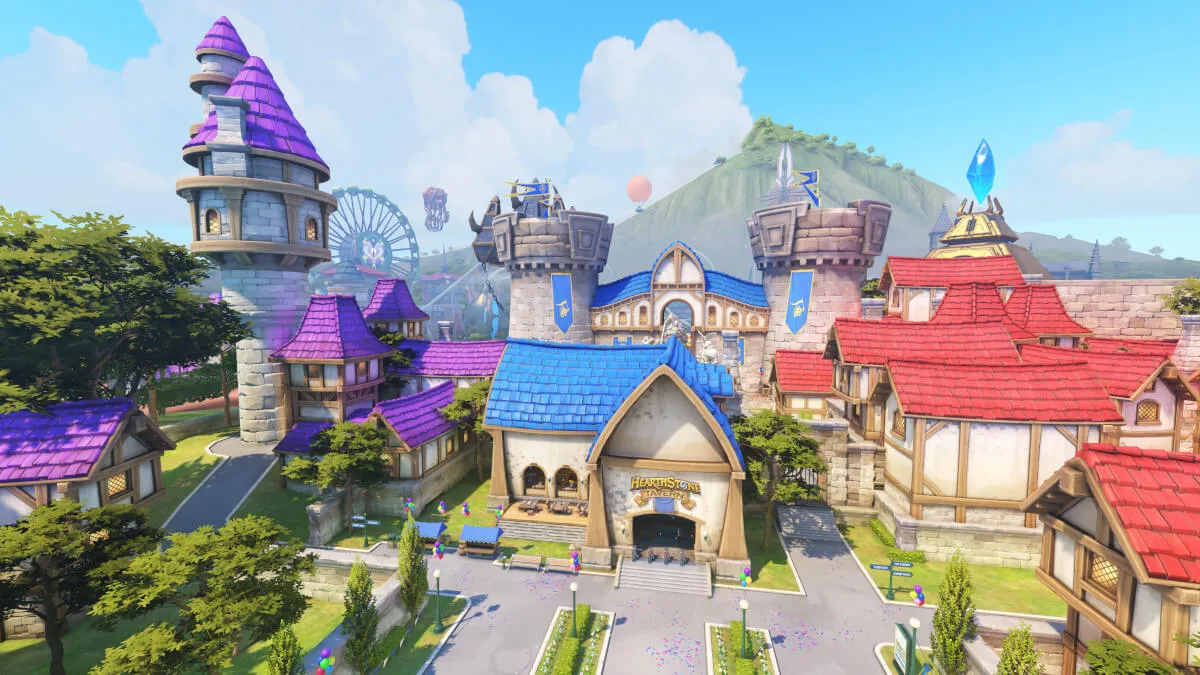
8 mapsHybrid combines two objectives into one map experience. Attackers must first capture a control point (similar to Assault), and once secured, a payload is unlocked and must be escorted to the final delivery zone. This two-phase structure rewards teams that maintain momentum. Defenders have two separate defensive tasks: holding the initial capture point and then stopping the payload.
How to Win
Attackers win by capturing the first point AND successfully delivering the payload. Defenders win by stopping attackers at either the first point or the payload route.
Ideal For
Teams that enjoy adaptive gameplay and adjusting strategy between distinct phases.
Key Mechanics
- First phase plays like Assault — capture the point by standing on it
- Capturing the first point immediately spawns the payload
- Timer resets or extends when the first point is captured
- Second phase plays exactly like Escort
- Defenders often use different strategies for each phase
Pro Tips
- Invest ultimate charges on the first point — a clean capture sets up a strong payload push
- After capturing point A, stay grouped to immediately contest the payload spawn
- Defenders should not over-commit to the first point — falling back to the payload route is smart
- Flanker heroes are especially effective at disrupting the transition phase

Control
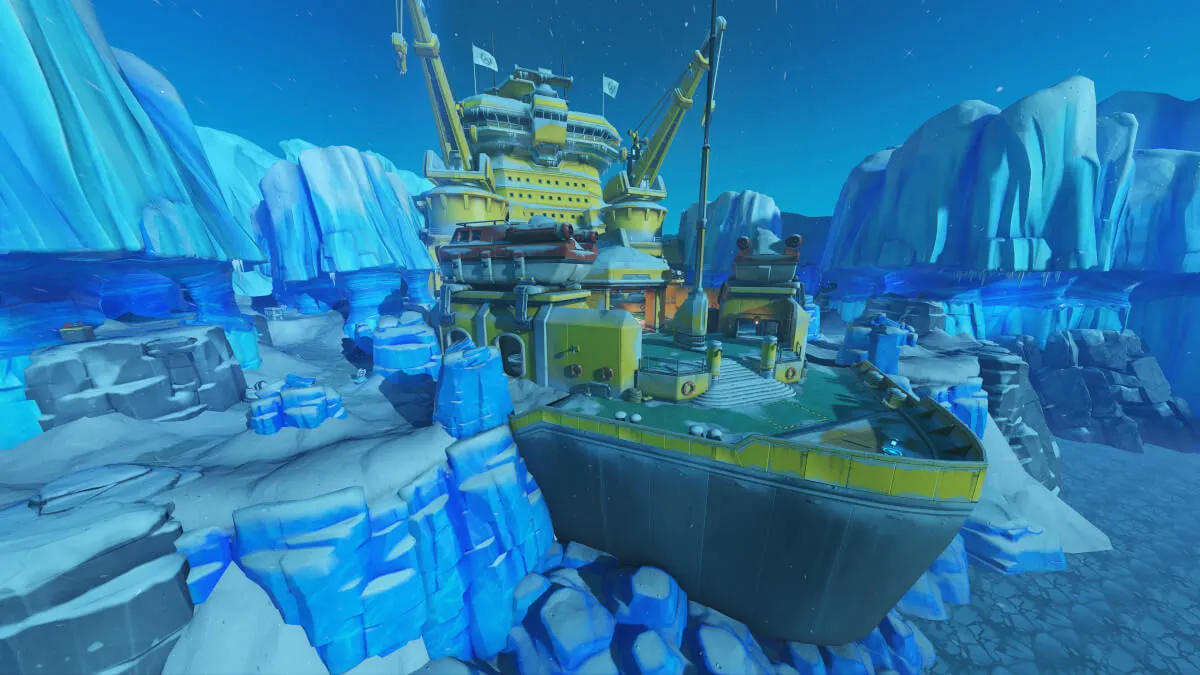
10 mapsControl is a best-of-three format where both teams fight over a single capture zone on each sub-map. Unlike other modes, both teams start as attackers simultaneously. A team wins a round by reaching 100% capture progress. Maps feature three distinct sub-maps, and the first team to win two rounds wins the match. This mode rewards sustained team fight strength and composition synergy.
How to Win
First team to reach 100% on the capture point in two out of three rounds wins.
Ideal For
Teams with strong teamfight compositions and good coordination.
Key Mechanics
- No separate attack/defense roles — both teams contest simultaneously
- Capture progress can be contested and paused by enemy presence
- A team holding 99% control can be denied by a single enemy contesting the point
- Each round is played on a different part of the map (sub-map)
- Spawn advantages shift as the point location changes each round
Pro Tips
- The 99% stall is powerful — one tank or brawler contesting saves your team
- Off-angle picks around the point often decide control fights
- Track enemy ultimate economy — contest aggressively when they lack ults
- Do not fight mid between spawns — go to the point immediately
- Heroes with strong area denial (Zarya, Orisa, Mei) excel on control maps

Push
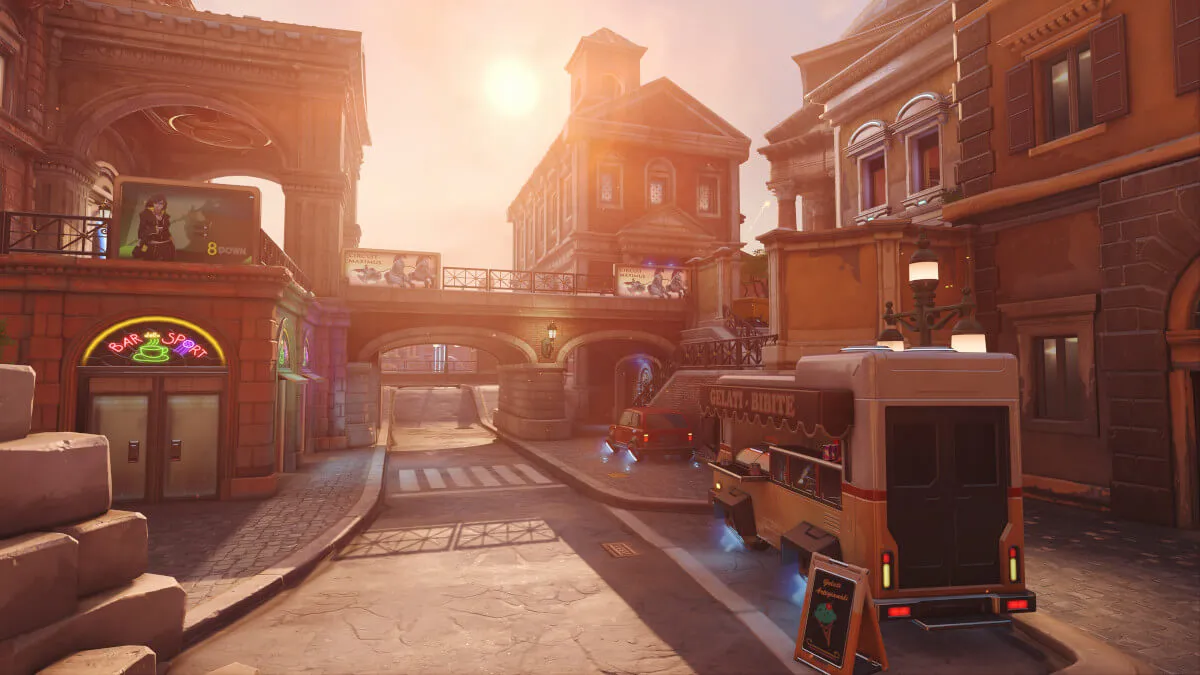
6 mapsPush is a newer game mode introduced with Overwatch's second era. Both teams compete to control a robot (TS-1) that starts in the center of the map. When a team controls the robot, it walks toward the enemy's end of the map. If the opposing team retakes the robot, it reverses direction and walks the other way. The team that pushes the robot the farthest into enemy territory when time expires wins.
How to Win
Push the robot to the enemy's final position, or have it end up further in enemy territory than your opponent when time expires.
Ideal For
Dynamic, fast-paced players who enjoy continuous teamfights without set attacker/defender roles.
Key Mechanics
- Robot moves automatically once a team controls it — you do not push it manually
- Robot reverses direction when control switches teams
- Unlike payload, only one player is needed to move the robot
- Both teams can fight over the robot throughout the entire map
- Reaching a checkpoint refreshes the timer
Pro Tips
- Win the initial fight over the robot to establish early map control
- Prioritize tempo — pushing the robot deep forces enemies into unfavorable spawns
- Mobility heroes like Genji, Tracer, and Lucio are excellent for contesting the robot quickly
- Do not chase kills away from the robot — always maintain presence near it

Flashpoint
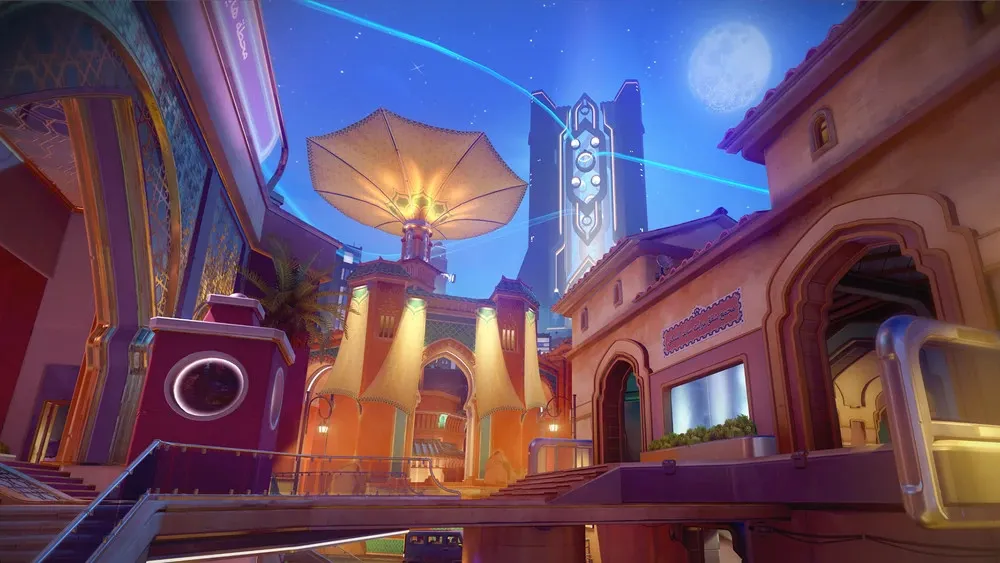
3 mapsFlashpoint is a competitive mode where both teams race to capture 3 of 5 sequential capture points that activate one at a time across the large map. When a point is captured, the next one spawns in a different location — often far from the last. This forces both teams to constantly rotate across the map. The first team to secure 3 points wins.
How to Win
Capture 3 out of 5 Flashpoints before your opponents do.
Ideal For
Players who enjoy map-wide rotation and dynamic engagements across large environments.
Key Mechanics
- Points activate one at a time in a predetermined sequence
- Both teams start as neutral — no set attacker or defender
- After a point is captured, the next spawns at a new location
- Map size is significantly larger than traditional Overwatch maps
- Rotation speed and positioning between points is critical
Pro Tips
- Predict where the next Flashpoint will spawn and begin moving before the current one is decided
- High-mobility heroes (Genji, Tracer, Lucio, Moira) are especially valuable for quick rotations
- Do not group up in one large blob — split pressure and control map space
- First-touch advantage is significant — arriving at the point first starts capture progress

Clash
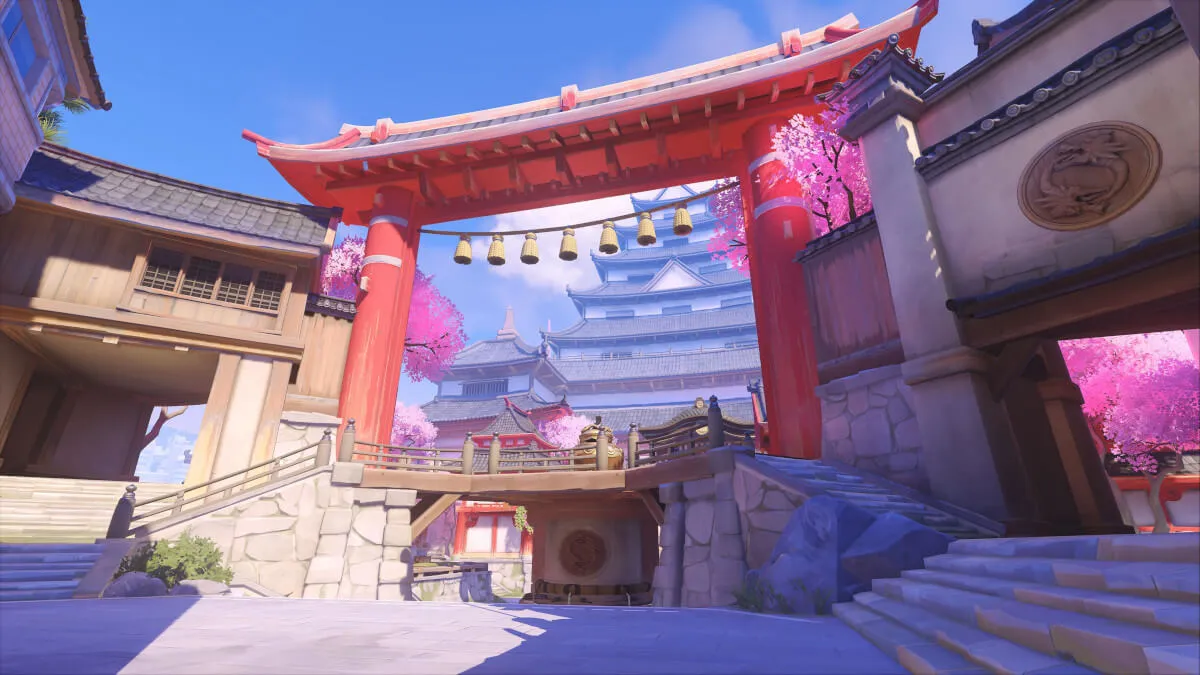
2 mapsClash is Overwatch's newest competitive game mode. Maps feature 5 capture points arranged symmetrically: one center point, two mid points, and two final points near each team's base. Teams fight for the center point first. Capturing a point grants control of the next point in that direction. The first team to capture their opponent's final home point wins.
How to Win
Capture the enemy's final point by progressing through the 5-point chain.
Ideal For
Teams who enjoy structured progression with a clear front line that shifts during the match.
Key Mechanics
- The center point (point 3) is the starting objective for both teams
- Capturing a point unlocks the next point further into enemy territory
- Losing a point causes your team to fall back and defend the previous one
- Teams can reverse momentum by retaking points
- Spawn locations shift as points are captured — expect unfamiliar angles
Pro Tips
- Win the center point fight to establish map control and momentum
- Do not overextend after capturing — regroup and hold the newly captured point
- Ultimates should be saved for high-stakes point fights, not skirmishes
- Strong team composition synergy matters more here than individual skill

Assault
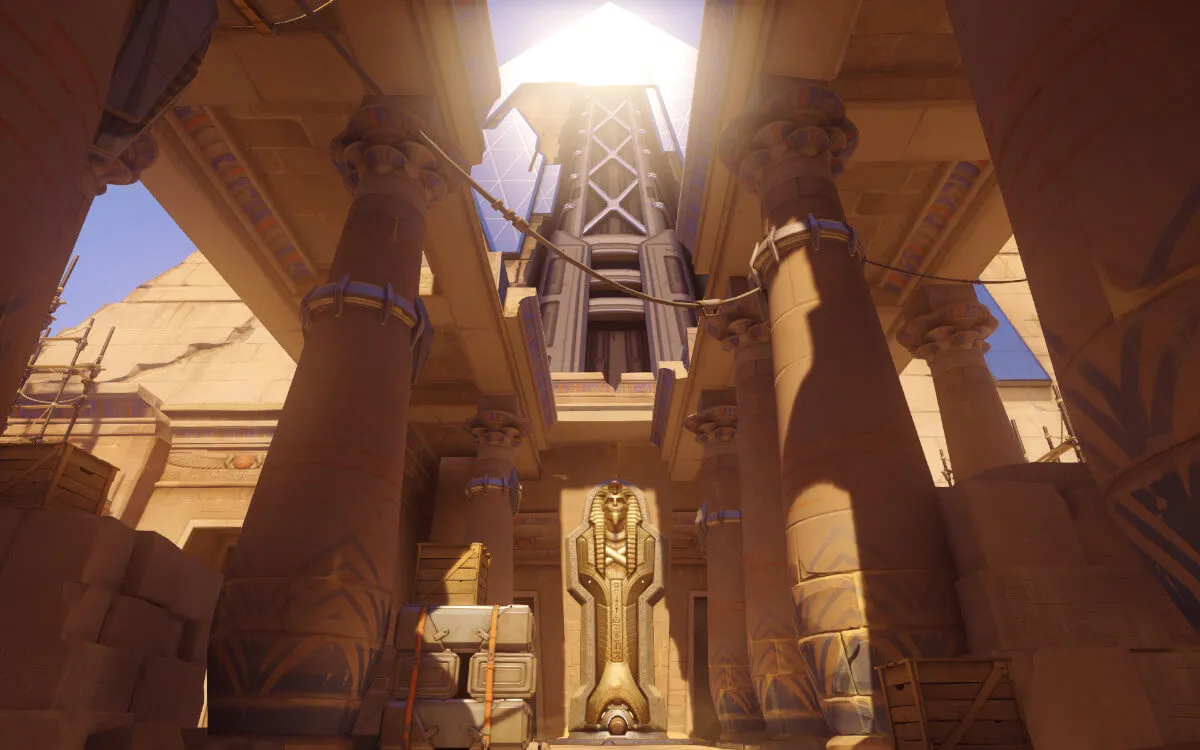
5 mapsAssault (also called 2CP — Two Capture Points) was an original Overwatch game mode that has since been removed from the competitive rotation but still appears in custom games and some arcade modes. Attackers must capture two sequential control points (A then B) on a map before time runs out. Defenders must stop them.
How to Win
Attackers win by capturing both Point A and Point B. Defenders win by preventing attackers from capturing Point B before time expires.
Ideal For
Fans of classic Overwatch with traditional attack/defense structure.
Key Mechanics
- Two sequential capture points — A must be taken before B is accessible
- Capturing Point A refreshes the attack timer and spawns attackers closer
- Point B is typically much harder to capture than Point A
- This mode was removed from competitive due to first-point capture rate imbalance
Pro Tips
- Use ultimate abilities early on Point A — waste fewer resources on the easier objective
- After capturing A, push immediately while defenders are repositioning
- Defenders should focus efforts entirely on Point B after A is lost
- High-ground control near Point B is often the key to winning defense
Arcade & Other Game Modes
Additional game modes available in Arcade and special events. Great for practicing skills and having fun outside competitive.

Deathmatch
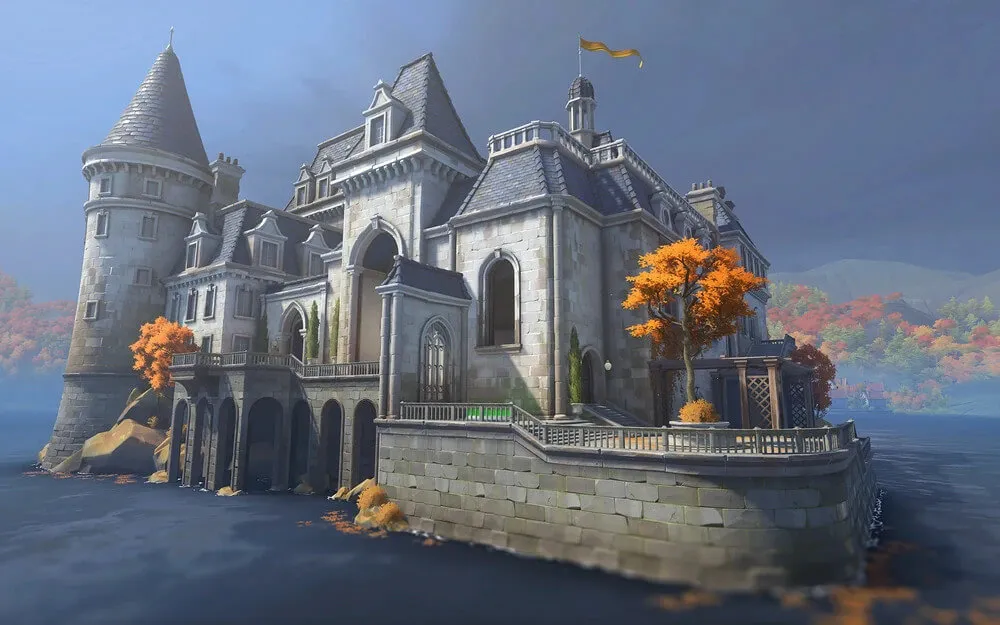
4 mapsDeathmatch is a free-for-all arcade mode where 8 individual players compete against each other with no teams. Every player fights for themselves, and the goal is to reach 20 eliminations before anyone else. This mode is a great way to warm up mechanics and practice individual hero skills.
Key Mechanics
- No teams — everyone is an enemy
- Self-healing abilities still function normally
- Players respawn after being eliminated
- Environmental kills count as eliminations
Pro Tips
- Focus on self-sufficient heroes with strong 1v1 potential (Reaper, Cassidy, Genji)
- Avoid fighting multiple enemies at once — pick isolated targets
- Use the environment to your advantage — high ground and flanks are critical
- Track the leaderboard — focus on stopping the player closest to 20 eliminations

Team Deathmatch
4 mapsTeam Deathmatch is a 4v4 format where two teams race to 30 combined eliminations. Unlike free-for-all Deathmatch, teamwork and coordination matter here. Players can support, group up, and use team ultimates effectively.
Key Mechanics
- Two teams of 4 players each
- Any elimination by a teammate counts toward the team's total
- Team ultimates function normally
- No payload or capture point — pure team combat
Pro Tips
- Group up and fight as a unit rather than splitting across the map
- Supports and tanks are more viable here than in Deathmatch
- Focus fire single targets to secure eliminations faster
- Track enemy ultimate economy and group up before they use them

Capture the Flag
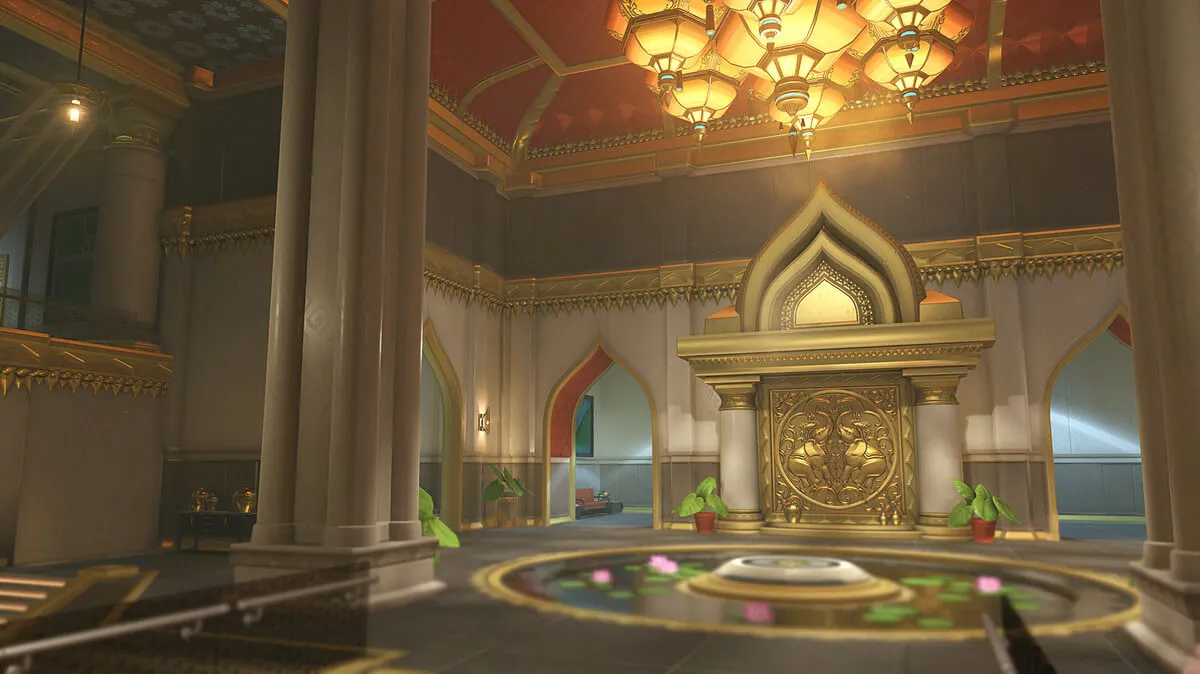
1 mapsCapture the Flag is a seasonal and arcade mode in Overwatch. Two teams each protect their own flag while attempting to steal the enemy flag and return it to their base. To score, a team must carry the enemy flag back to their own base while their flag is still present.
Key Mechanics
- Both teams have a flag at their base
- A player carrying the flag cannot use movement abilities (in standard rules)
- Your own flag must be at your base to score
- Dropped flags return to base after a short time
Pro Tips
- Mobile heroes (Lucio, Tracer) are excellent for quick flag steals
- Tanks with high HP (Roadhog, Ramattra) work well as flag carriers
- Split your team: some protect your flag, others attack the enemy
- Use ultimates to clear defenders before a flag grab attempt

Elimination
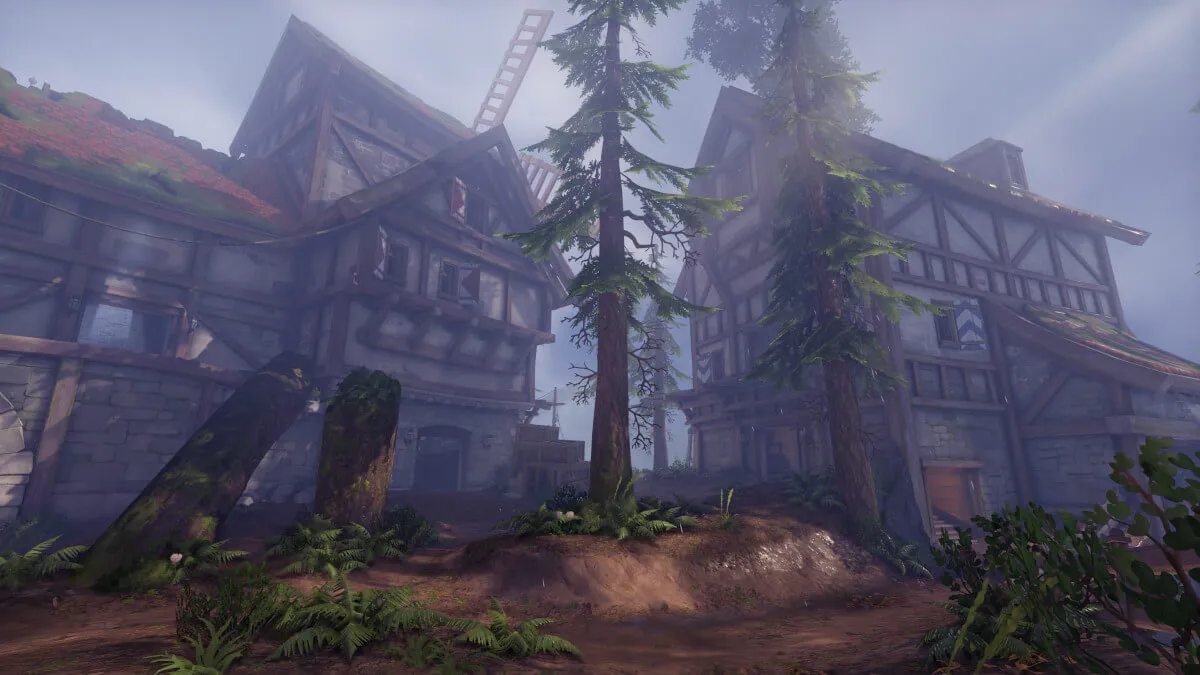
4 mapsElimination is a 3v3 arcade mode with a bracket-style tournament format. Teams compete in rounds — you must eliminate the entire enemy team to win a round. There are no respawns within a round, so every life matters. This mode heavily rewards mechanical skill, positioning, and ultimate management.
Key Mechanics
- No respawns within a round — every fight is high stakes
- Best-of-three or five bracket format
- Small 3-player teams force every player to contribute
- Hero switching is allowed between rounds
Pro Tips
- Focus fire to eliminate one target quickly rather than spreading damage
- Defensive ultimates (Zarya bubble, Moira Coalescence) are valuable for saving teammates
- Positioning is critical — avoid fighting 1v2 or 1v3
- Switch heroes between rounds based on what the enemy is running
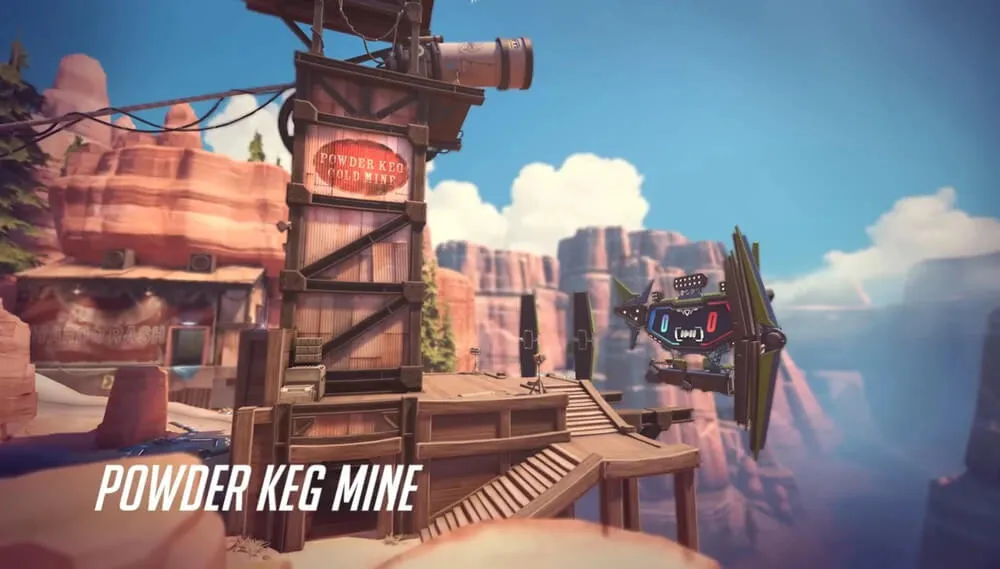

Payload Race
2 mapsBoth teams simultaneously push their own payload. The first team to deliver their payload wins.
Seasonal Game Modes
Seasonal game modes return annually tied to Overwatch's major events — Summer Games, Halloween Terror, and Winter Wonderland. These modes feature unique mechanics, exclusive heroes, and event-specific maps you won't find anywhere else in the game.
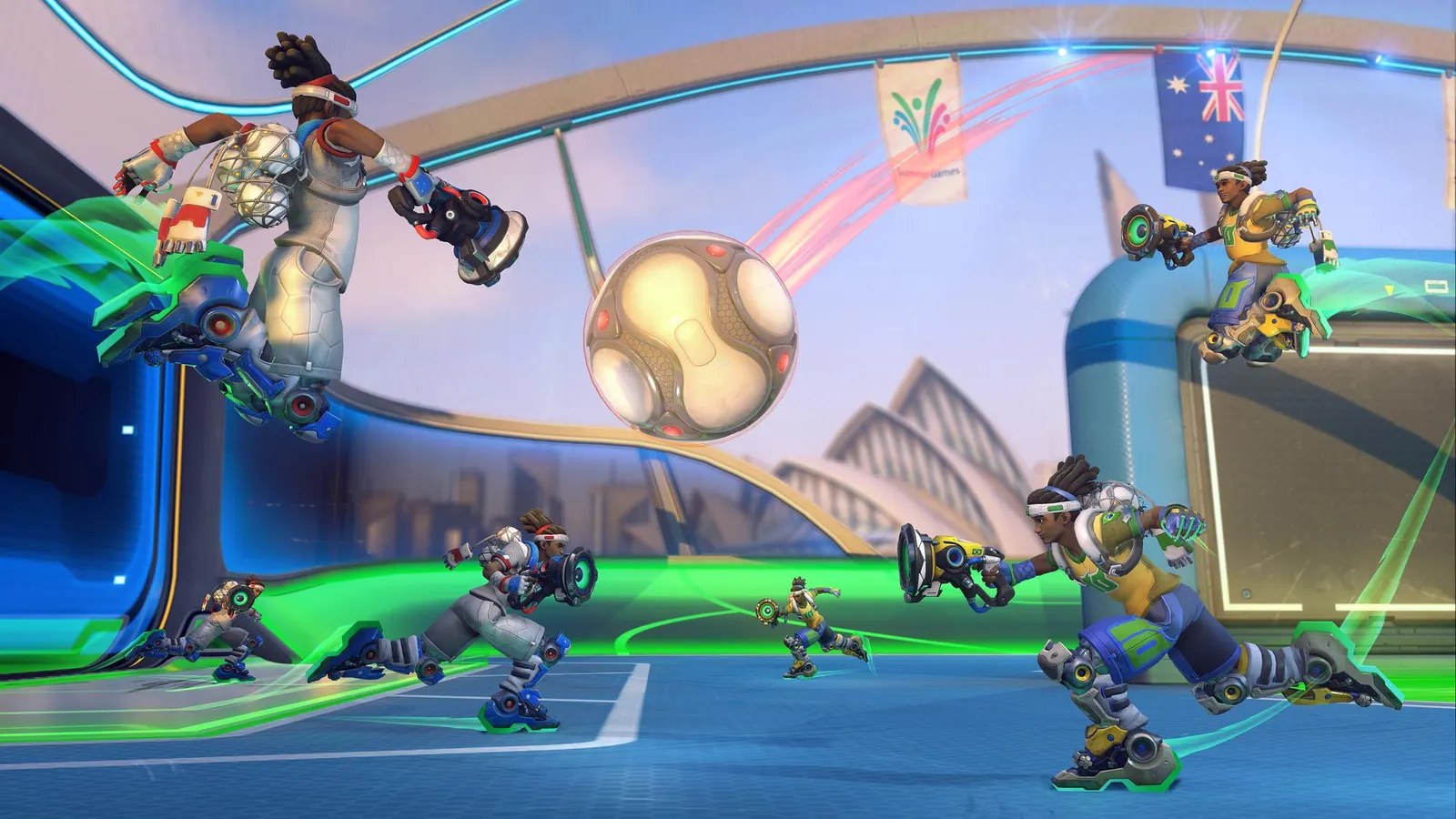
Lucioball
A 3v3 soccer match where all players control Lucio. Use Soundwave and melee to knock a giant ball into the enemy goal.
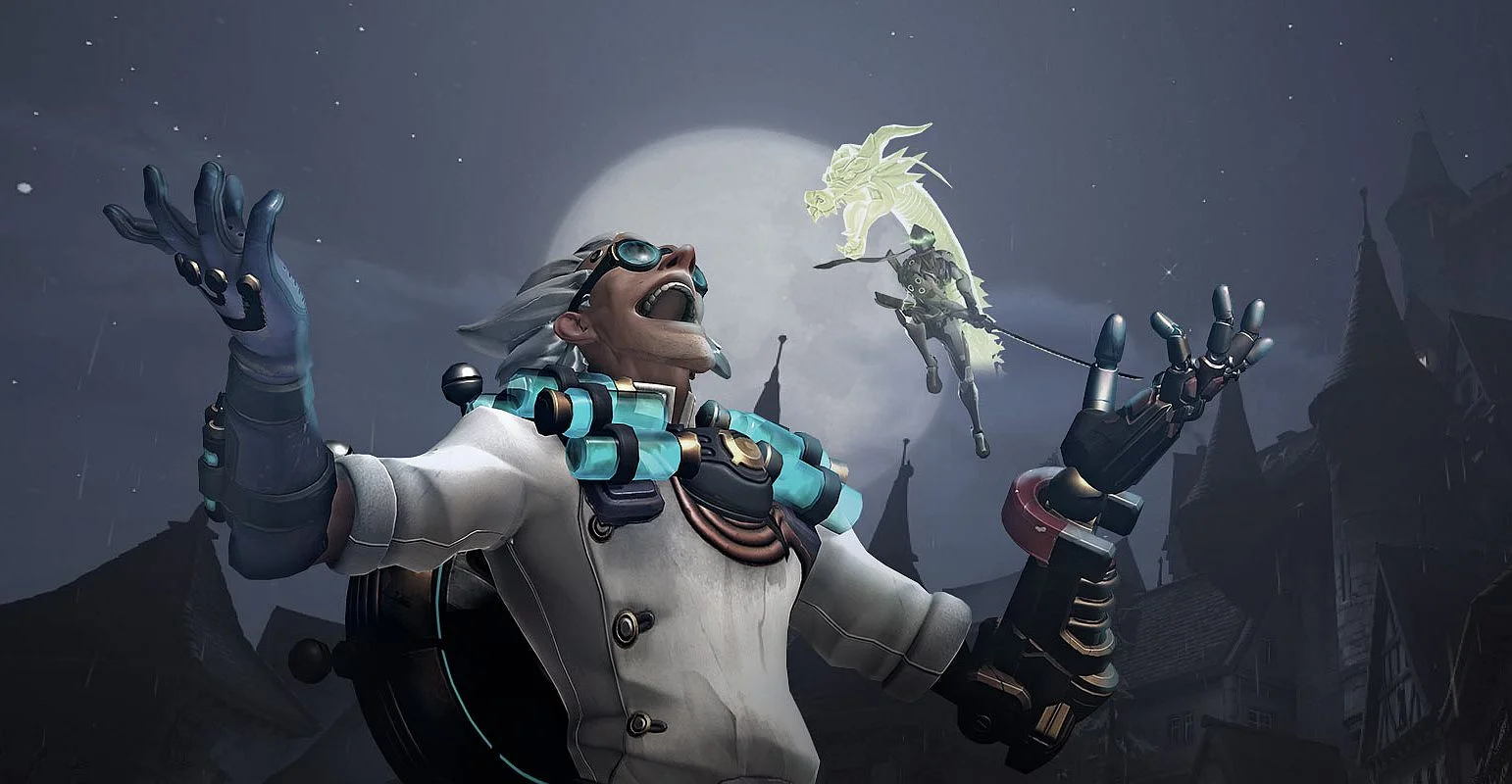
Junkenstein's Revenge
4-player co-op wave defense. Protect a castle gate from Zomnics and undead bosses across escalating difficulty tiers.
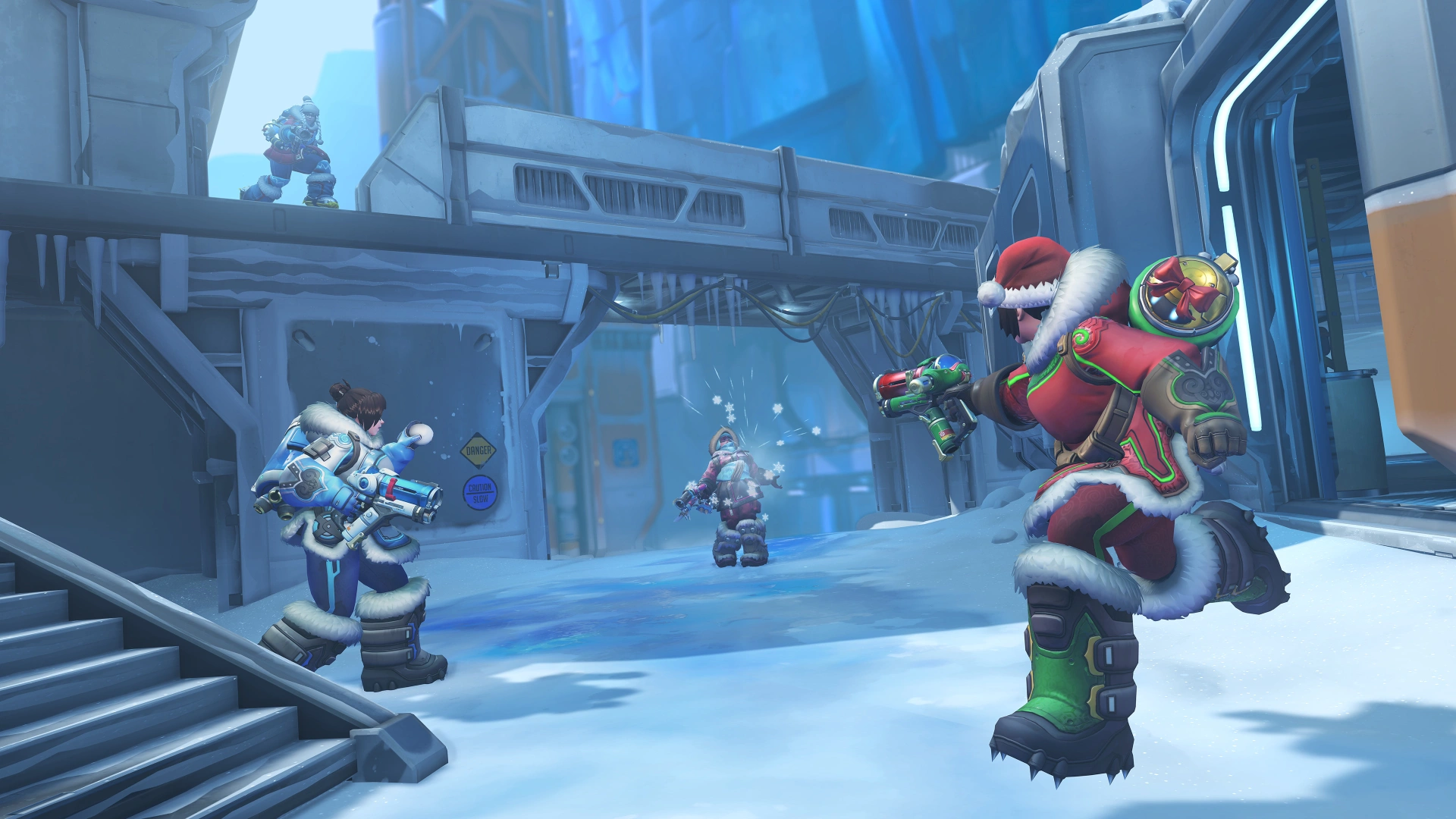
Mei's Snowball Offensive
5v5 elimination where every Mei carries a one-shot snowball blaster. Control reload zones to dominate.
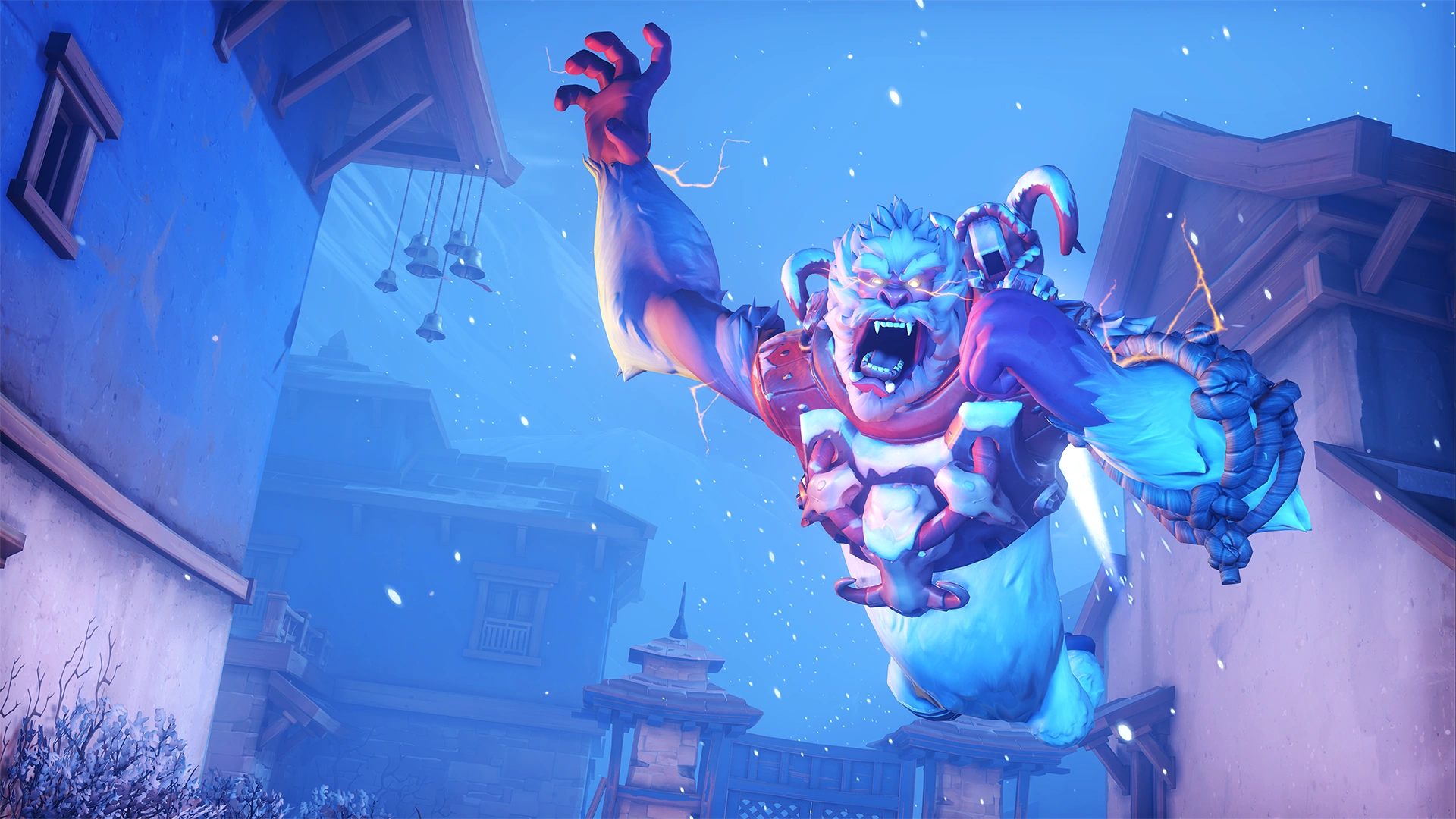
Yeti Hunt
5 Mei hunters vs. 1 Winston Yeti in an asymmetric showdown. Hunters try to kill the Yeti before it collects 4 meats and triggers Primal Rage.
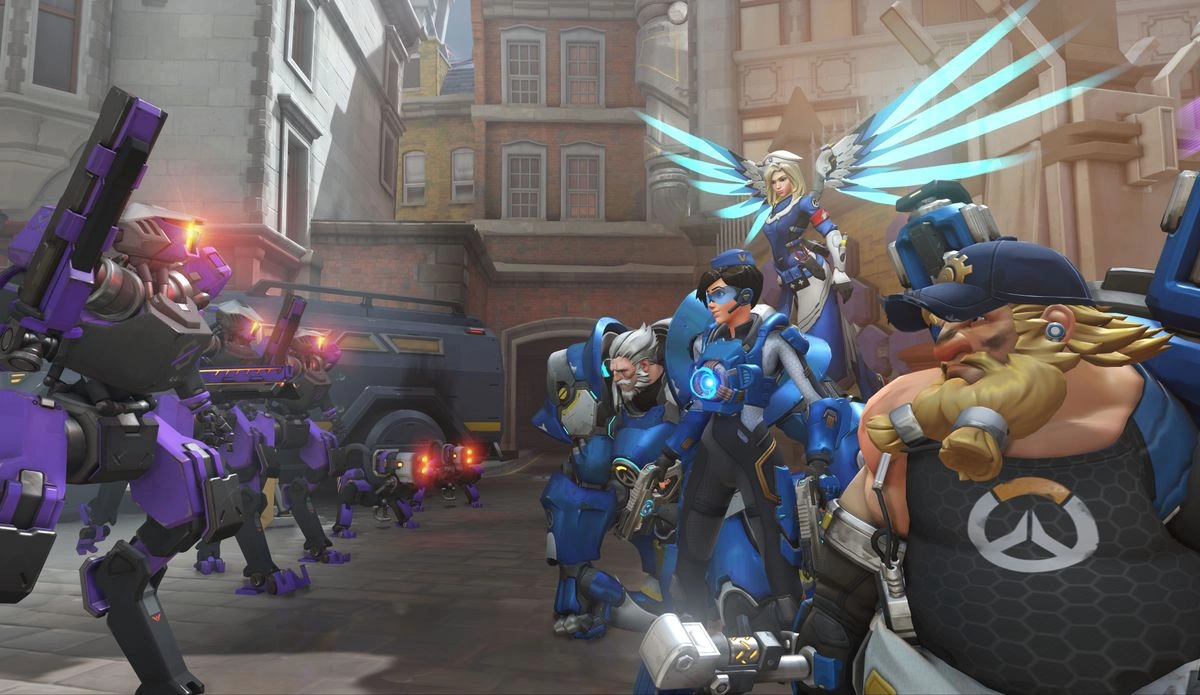
Overwatch Uprising
Relive Tracer's first mission: retake King's Row from Null Sector in this lore-rich 4-player PvE co-op mission.
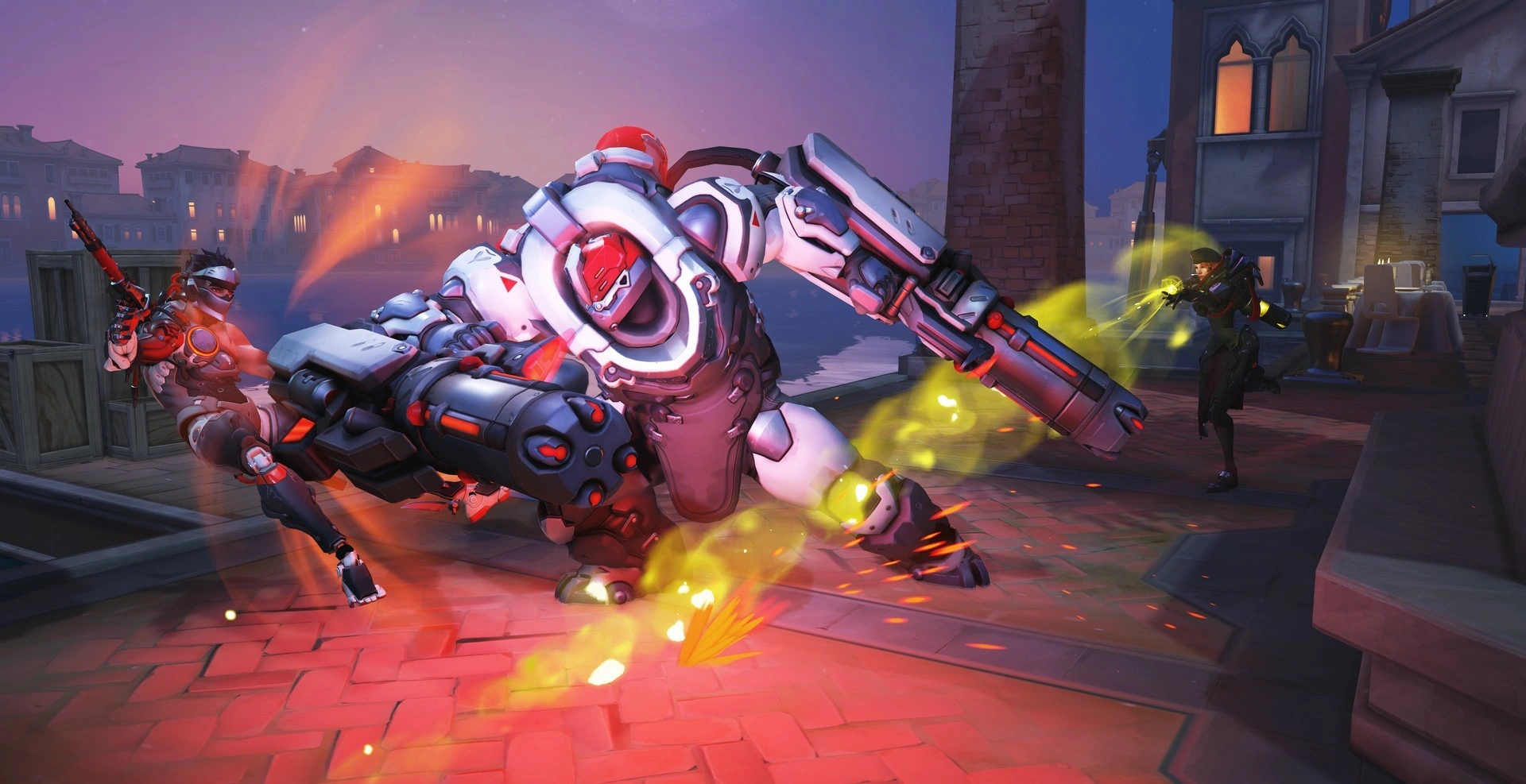
Overwatch Retribution
Fight through Venice as the Blackwatch unit after an unsanctioned Talon operation goes wrong. Left 4 Dead-inspired escape mission.
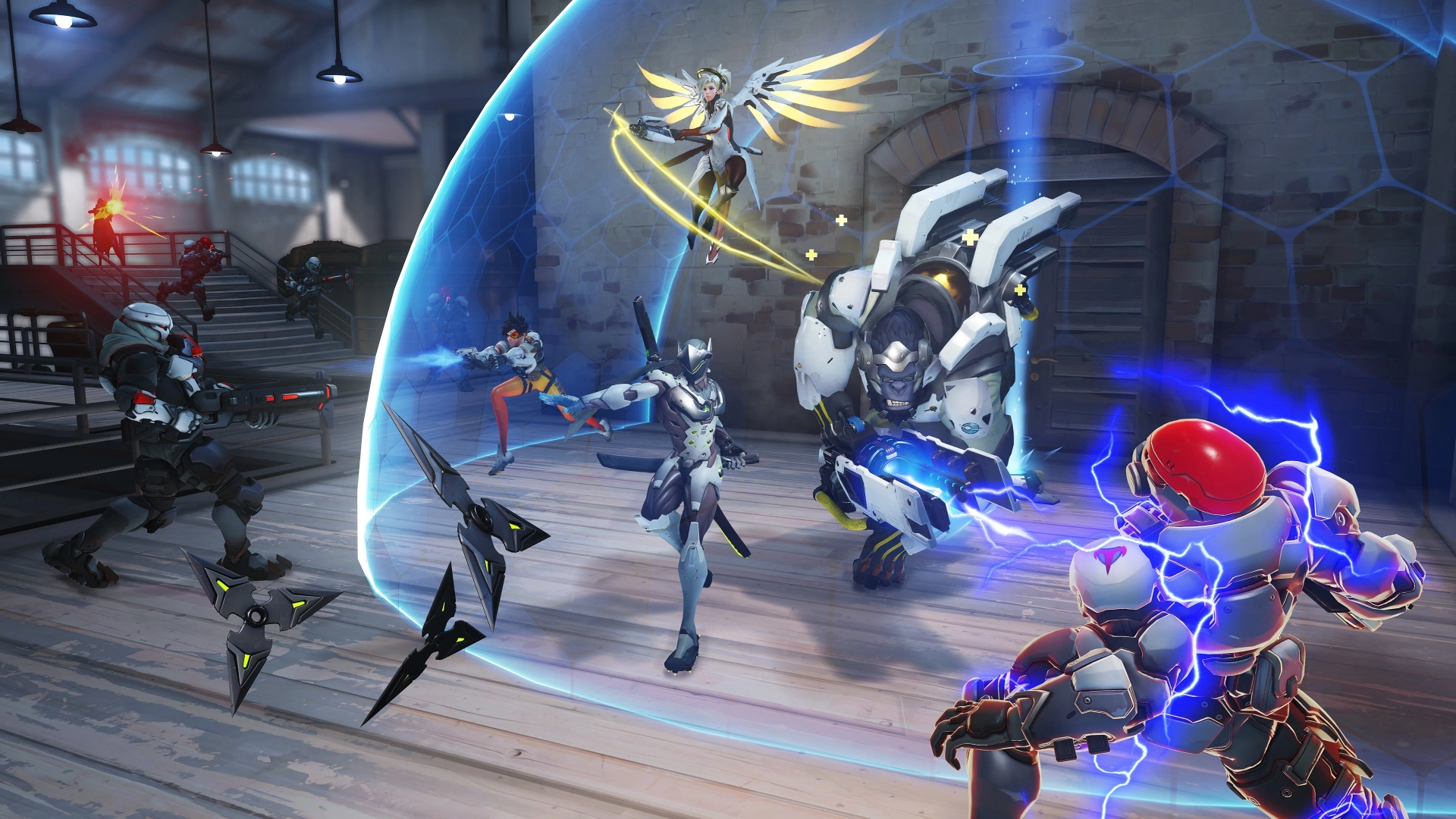
Overwatch Storm Rising
Chase Talon's financial omnic through Havana, Cuba in the final Overwatch Archives PvE story mission.
Limited Game Modes
Limited game modes are one-off or rarely-returning event modes tied to special occasions — anniversaries, holidays, and themed collaborations. Each one introduced completely original mechanics, exclusive heroes, and cosmetics available only during the event window.
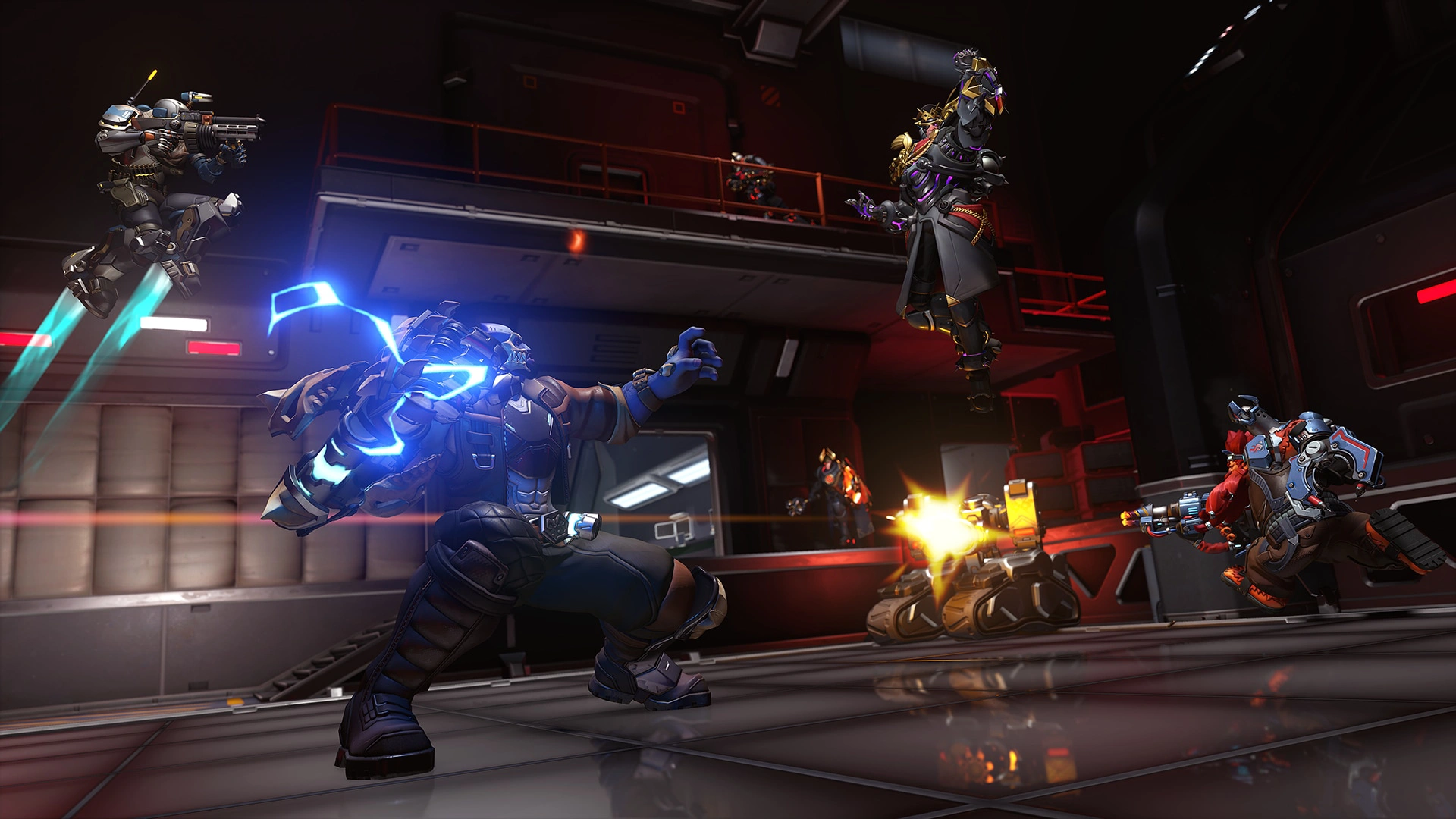
Starwatch: Galactic Rescue
A 4v4 PvP/PvE hybrid assault mode on a space-reworked Horizon Lunar Colony with gravity barrels, downed states, and low-gravity events.
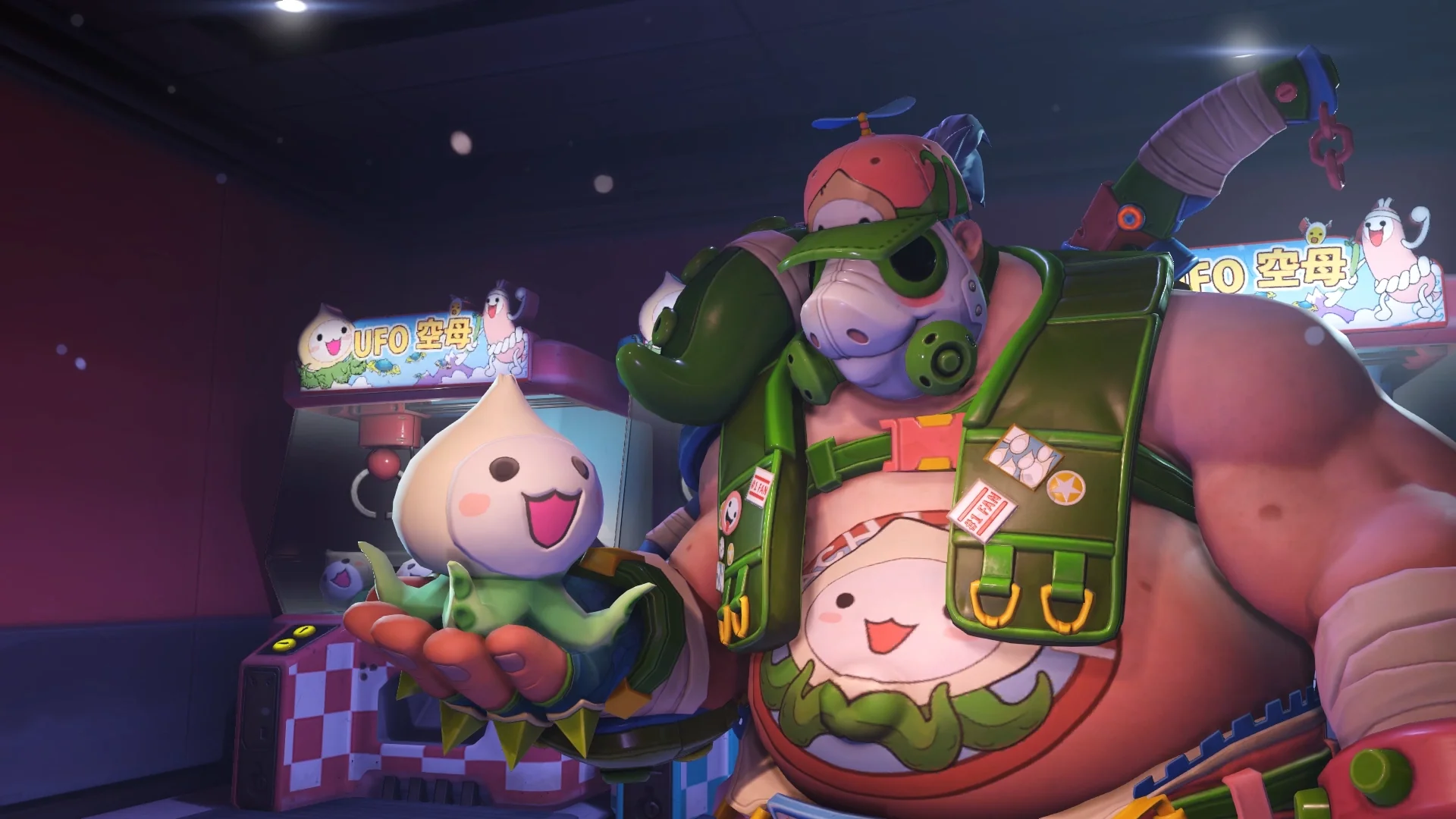
Roadhog's Catch-A-Mari
Kill-Confirmed-style 3v3 elimination. Eliminate enemies and collect the Pachimari toys they drop to score — enemies can steal your points.
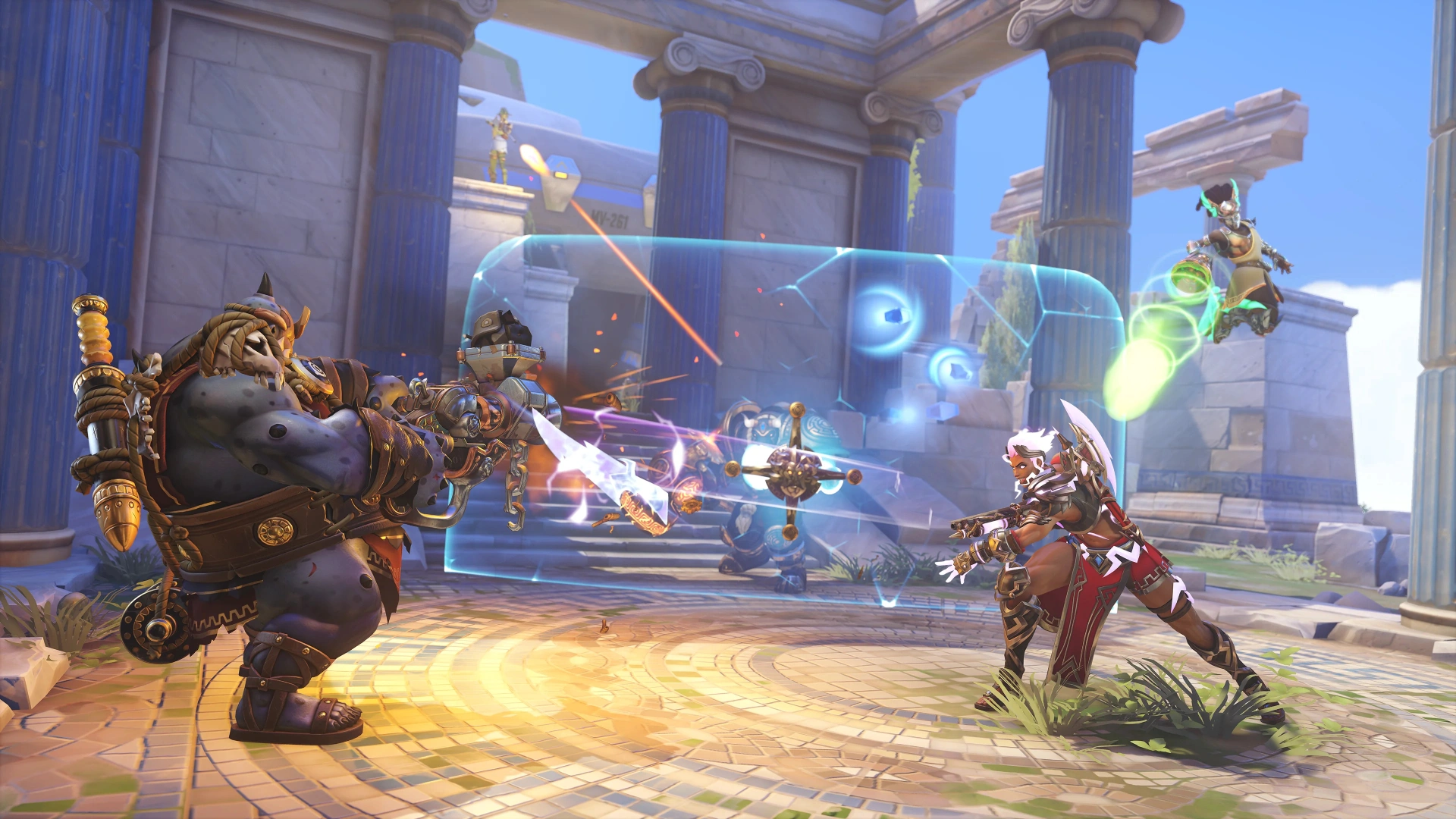
Battle for Olympus Deathmatch
8-player FFA deathmatch with 7 heroes wielding empowered Greek mythology ultimates. A global leaderboard determined the winner immortalized in-game.
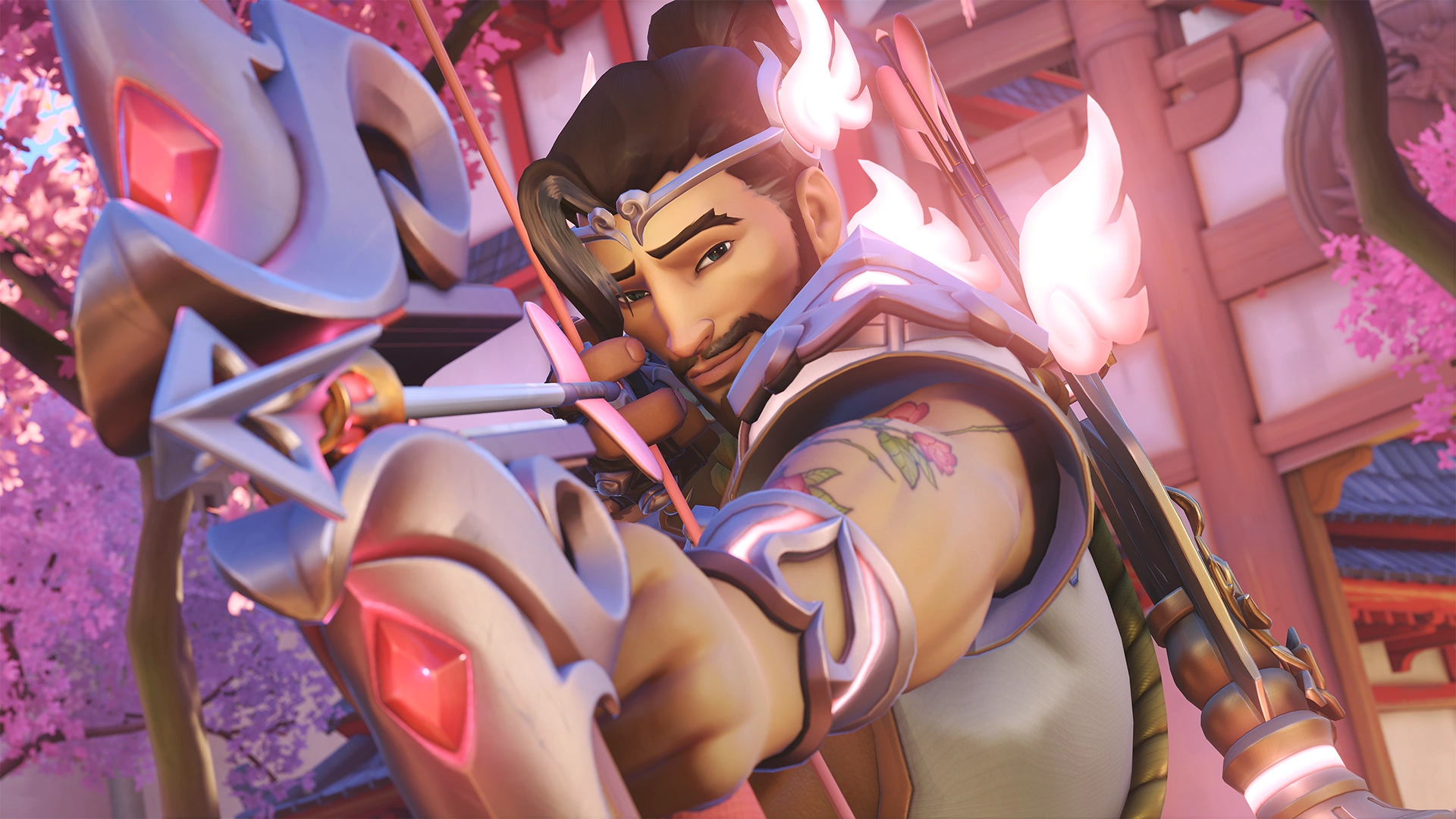
Loverwatch: Love Never Dies
Valentine's brawl featuring Cupid Hanzo's resurrected Scatter Arrow in a 4v4 brawl, plus a browser dating sim with Genji and Mercy.
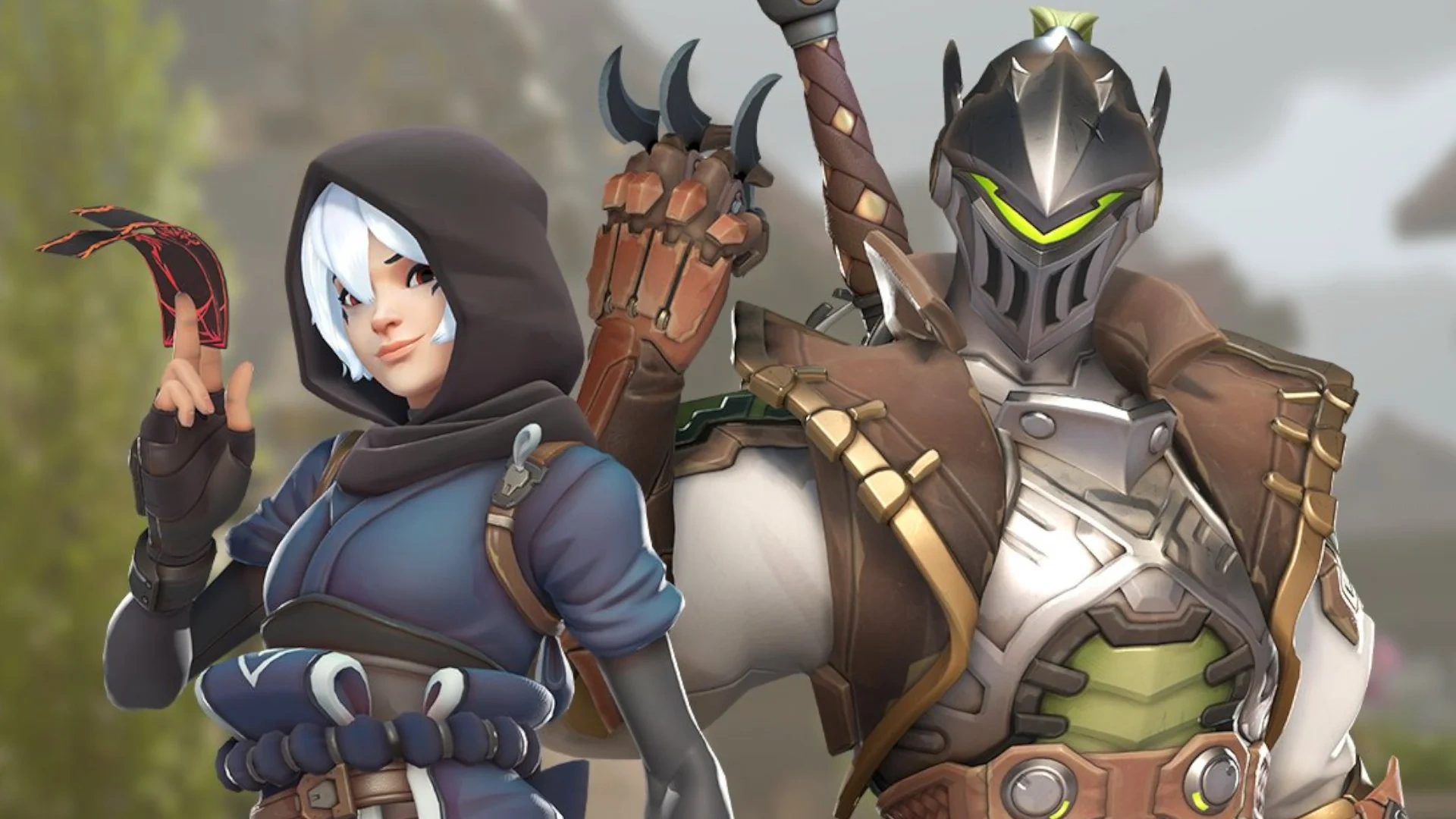
Mischief and Magic
Overwatch's Prop Hunt. Rogues (Kiriko) hide as objects while Knights (Genji) hunt them down. First to 3 round wins takes the match.
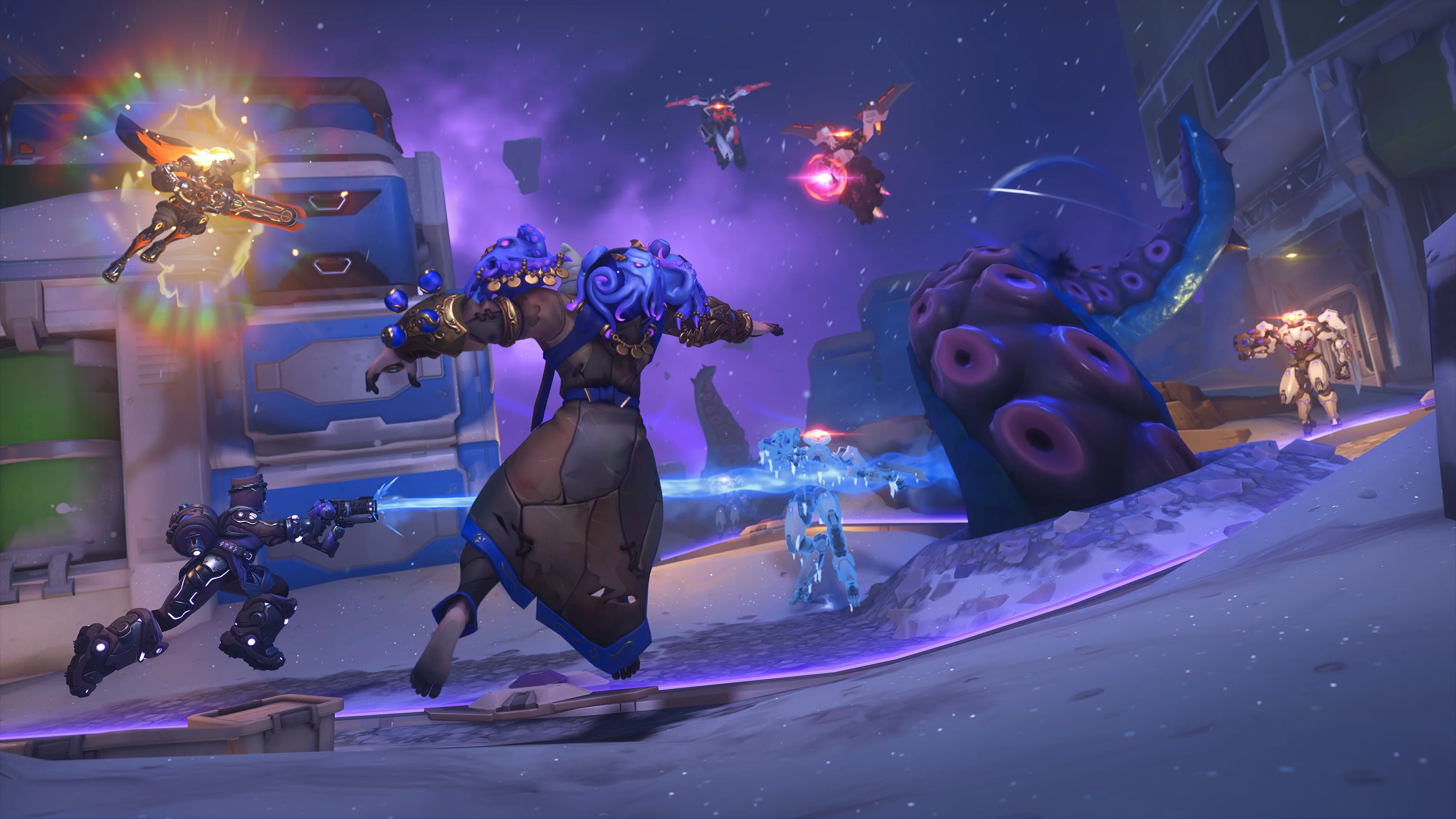
Cosmic Crisis
4-player co-op PvE mission with an optional betrayal twist. One player is secretly offered the chance to defect and eliminate their teammates.
Frequently Asked Questions
What is the best game mode for beginners in Overwatch?
Control is generally the most beginner-friendly competitive mode because both teams have equal roles — there is no attacker or defender distinction. You simply fight for a single capture point. Quick Play also features all modes, making it ideal for learning each one without ranked pressure.
How many game modes are in Overwatch?
Overwatch features 14 game modes in total. The core competitive modes are Escort, Hybrid, Control, Push, Flashpoint, Clash, and Assault. Arcade modes include Deathmatch, Team Deathmatch, Capture the Flag, Elimination, Payload Race, and Elimination. Beyond those, seasonal modes like Lucioball and Junkenstein's Revenge return annually, and limited-time modes such as Starwatch: Galactic Rescue and Cosmic Crisis appear during special events. Competitive Play currently rotates through Escort, Hybrid, Control, Push, Flashpoint, and Clash.
What is the difference between Control and Push in Overwatch?
Control is a best-of-three format where both teams fight over a single stationary capture point. Push has both teams competing to move a robot (TS-1) across a linear map — whoever controls the robot area moves it toward the enemy base. Push is more dynamic and map-wide; Control is more point-focused and positional.
What is Clash mode in Overwatch and how does it work?
Clash features 5 capture points arranged symmetrically. Both teams start fighting for the center point (point 3). Capturing it unlocks the next point toward the enemy base. The first team to capture the opponent's final home point wins. It rewards sustained momentum and teamfight consistency.
What is the difference between Escort and Hybrid in Overwatch?
Escort maps have attackers pushing a payload from start to finish. Hybrid maps have a two-phase structure: attackers must first capture a control point (Point A), which then unlocks the payload. Hybrid rewards teams that maintain their momentum and ultimate economy across both phases.
Which Overwatch game mode is best for improving aim and mechanics?
Deathmatch (free-for-all) is the best mode for improving individual mechanics and aim — you are constantly fighting 1v1 engagements with no teammates to rely on. Elimination (3v3) is great for improving game sense and positioning under high-stakes conditions with no respawns.
How does Flashpoint differ from Control in Overwatch?
In Control, teams fight over one stationary point per round on a small sub-map. In Flashpoint, 5 capture points activate sequentially across a massive map — both teams race to each new point as it spawns. Flashpoint heavily rewards rotation speed and map awareness, while Control rewards sustained teamfight strength.
Can you play Assault (2CP) maps in Overwatch anymore?
Assault maps (Hanamura, Volskaya, Anubis, etc.) were removed from the competitive and Quick Play rotation but are still available in Custom Games and occasionally in Arcade. You can revisit them through custom game lobbies or when they appear in rotating arcade playlists.
What heroes are best for payload game modes in Overwatch?
For Escort and Hybrid, heroes that can stay on or near the payload are most effective. Tanks like Reinhardt and Orisa excel at anchoring the payload. Mobile supports like Lucio are invaluable for both pushing and returning quickly. Offensive heroes like Soldier: 76 and Bastion deal consistent damage while staying near the objective.